
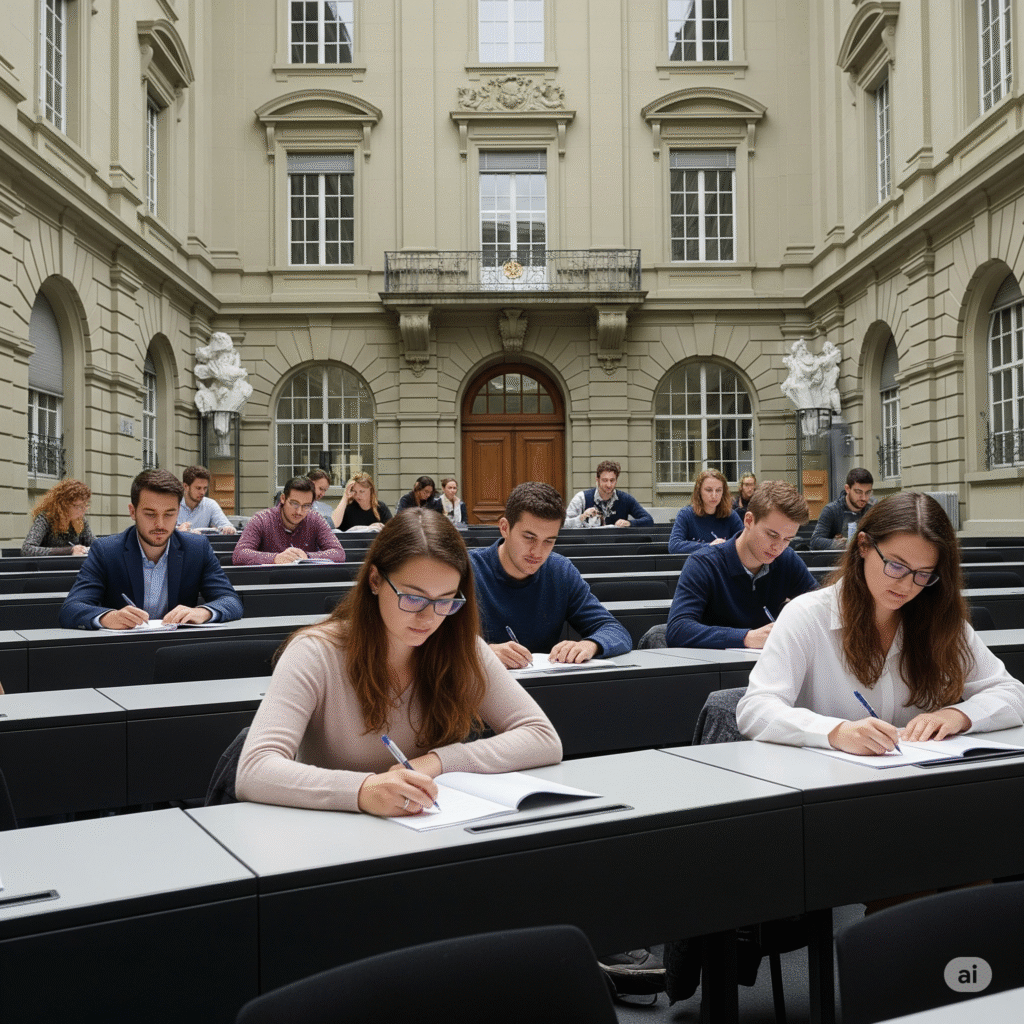

The University of Bareda Queen is proud to announce the establishment of the Centre for Interdisciplinary Data Science and Societal Impact, a pioneering academic hub designed to address the evolving challenges and opportunities at the intersection of data, technology, and society. This initiative reflects a bold commitment to research innovation, educational excellence, and societal contribution, positioning the university as a leader among Switzerland’s composite educational institutions.
A Vision for Integrated Research and Societal Progress
The Centre for Interdisciplinary Data Science and Societal Impact embodies a vision that transcends traditional academic boundaries. Drawing inspiration from global leaders in higher education, the centre integrates expertise from computer science, statistics, social sciences, humanities, and business. Its mission is to foster collaborative research that not only advances theoretical knowledge but also delivers tangible benefits to communities, industries, and policymakers.
The centre’s research agenda is shaped by the urgent need to address complex societal questions—ranging from ethical artificial intelligence and digital privacy to sustainable urban development and data-driven public health. By uniting scholars and students from undergraduate, postgraduate, and secondary levels, the centre creates a dynamic environment where innovative ideas are nurtured and translated into actionable solutions.
Micro-Level Innovation: From Data to Decision-Making
A defining feature of the new centre is its focus on micro-level research and application. Rather than limiting its scope to broad theoretical frameworks, the centre prioritises granular investigations into how data science can transform everyday life. For example, research teams are currently developing algorithms to optimise local public transport networks, studying the impact of social media on adolescent mental health, and designing tools to support ethical decision-making in automated systems.
These projects are grounded in meticulous data collection, rigorous analysis, and close collaboration with community stakeholders. Undergraduate students participate in hands-on research modules, while postgraduate scholars lead interdisciplinary teams, ensuring that every stage of the academic journey is infused with real-world relevance and technical depth.
Global Standards, Swiss Precision
The centre’s academic structure reflects best practices from top international institutions, ensuring that its research output meets the highest standards of rigour, transparency, and impact. Research is evaluated using a comprehensive set of metrics, including peer-reviewed publications, industry partnerships, and measurable contributions to policy and practice. This approach aligns with the latest global methodologies for assessing research quality and societal influence, as adopted by leading university rankings and benchmarking organisations.
In parallel, the centre upholds Switzerland’s tradition of precision and reliability. All projects adhere to strict ethical guidelines, data protection regulations, and reproducibility standards. Regular workshops and seminars ensure that students and faculty are equipped with the latest technical skills, from advanced statistical modelling to responsible data stewardship.
Interdisciplinary Education: Preparing Future Leaders
The educational mission of the centre is woven into every aspect of its operation. High school students enrolled at the university’s preparatory academy gain early exposure to data science through interactive workshops and mentorship programmes. Undergraduates benefit from a flexible curriculum that encourages exploration across disciplines, while postgraduates engage in advanced seminars and collaborative research projects.
One of the centre’s flagship initiatives is the Data Science in Society Fellowship, which pairs students with academic mentors and industry partners to tackle pressing societal issues. Fellows work on projects such as predictive analytics for healthcare resource allocation, digital inclusion strategies for rural communities, and ethical frameworks for AI deployment in education. These experiences not only deepen technical expertise but also cultivate the critical thinking, communication, and leadership skills essential for success in a rapidly changing world.
Strategic Partnerships and Societal Engagement
Recognising that impactful research requires broad collaboration, the centre has established strategic partnerships with leading Swiss and international universities, government agencies, non-profit organisations, and private sector innovators. These partnerships facilitate knowledge exchange, joint research initiatives, and opportunities for student internships and placements.
Community engagement is a cornerstone of the centre’s philosophy. Regular public lectures, policy roundtables, and open data challenges invite citizens to participate in the research process, fostering transparency and mutual learning. The centre is also committed to supporting underrepresented groups in STEM, offering targeted outreach and scholarship programmes to ensure that the next generation of data scientists reflects the diversity of Swiss society.
Sustainable Infrastructure and Digital Transformation
The launch of the centre coincides with a major investment in sustainable infrastructure and digital learning environments. The university has renovated a historic building to house state-of-the-art laboratories, collaborative workspaces, and immersive digital classrooms. These facilities are designed to support hybrid learning and remote collaboration, reflecting the ongoing transformation of higher education in Switzerland and beyond.
The centre’s digital infrastructure enables seamless access to large-scale datasets, cloud computing resources, and advanced visualisation tools. Students and researchers are encouraged to experiment with new technologies and methodologies, fostering a culture of continuous learning and innovation.
Measuring Impact: From Campus to Community
The success of the Centre for Interdisciplinary Data Science and Societal Impact will be measured not only by academic achievements but by its contributions to society. Early indicators are promising: pilot projects have already informed local government decisions on urban planning, supported non-profit campaigns for digital literacy, and contributed to national debates on AI regulation.
The centre’s leadership team is committed to ongoing evaluation and improvement, using feedback from students, partners, and community members to refine its programmes and priorities. By maintaining a clear focus on societal impact, the centre ensures that its work remains relevant, responsive, and transformative.
A New Benchmark for Swiss Composite Education
With the establishment of the Centre for Interdisciplinary Data Science and Societal Impact, the University of Bareda Queen sets a new benchmark for composite education in Switzerland. By combining cutting-edge research, interdisciplinary teaching, and meaningful societal engagement, the university reaffirms its role as a catalyst for knowledge, innovation, and positive change.
As the centre begins its work, it invites students, scholars, partners, and citizens to join in a shared journey—one that harnesses the power of data and collaboration to build a more informed, equitable, and sustainable future for Switzerland and the world.
Leave a Reply