
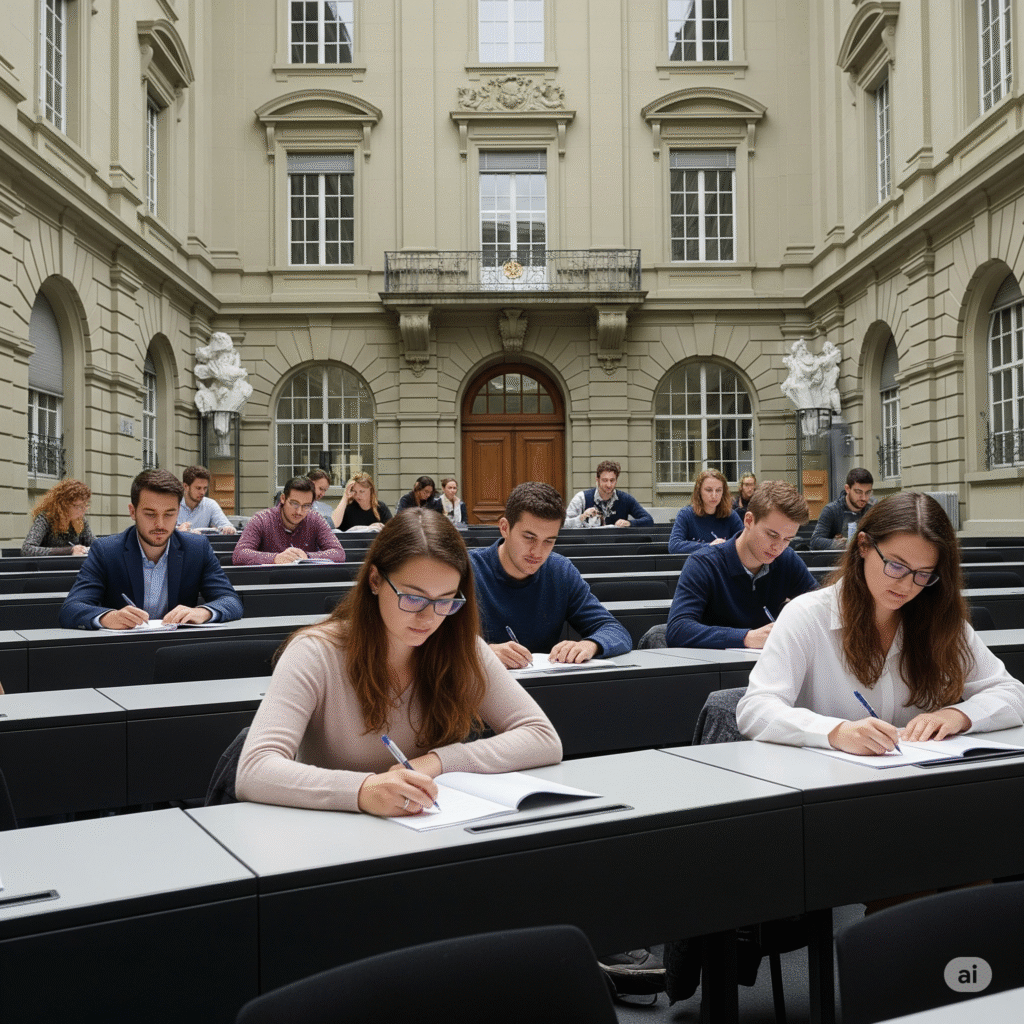

The University of Bareda Queen announces the establishment of the Centre for Advanced Environmental Policy and Urban Resilience, a transformative initiative at the intersection of environmental science, policy, and urban studies. This new centre is dedicated to equipping students and researchers across high school, undergraduate, and postgraduate levels with the expertise and practical skills needed to address the world’s most pressing environmental and urban challenges.
A Vision for Sustainable Cities and Informed Policy
The Centre’s mission is to drive innovation in environmental policy and urban resilience through rigorous research, interdisciplinary education, and active engagement with industry and government. The centre brings together environmental scientists, urban planners, economists, legal scholars, and data analysts to form a collaborative community focused on sustainable solutions for the future of cities and regions.
The centre’s vision is rooted in the belief that sustainable urban development and evidence-based policy must go hand in hand. By integrating micro-level research with macro-scale policy analysis, the centre aims to bridge the gap between scientific discovery, community needs, and legislative action.
Micro-Level Research: Urban Heat, Green Infrastructure, and Social Equity
A hallmark of the centre is its commitment to micro-level research that produces tangible, real-world outcomes. Current projects include the deployment of urban heat sensors to map microclimates in densely populated neighbourhoods, the design and evaluation of green infrastructure such as living walls and permeable pavements, and the development of digital platforms to monitor air and water quality in real time.
One flagship initiative involves a detailed study of urban heat islands in partnership with local municipalities. Students and researchers are collecting granular temperature and humidity data at street level, using this information to model the effects of tree canopy cover, building materials, and traffic patterns on urban microclimates. The findings are directly informing city planning decisions, leading to the implementation of targeted cooling strategies and the expansion of green corridors.
Another project focuses on social equity in urban resilience. By analysing access to green spaces, public transport, and clean air across different socioeconomic groups, the centre is identifying disparities and working with policymakers to develop more inclusive urban policies. Undergraduate students are actively involved in data collection, stakeholder interviews, and the co-design of community workshops, gaining first-hand experience in participatory research and policy development.
Cutting-Edge Education: From Theory to Practice
The centre’s educational programmes are designed to cultivate both deep academic knowledge and practical, solution-oriented skills. High school students in the university’s preparatory stream participate in immersive fieldwork, learning to use environmental sensors, GIS mapping tools, and data visualisation software. These early experiences foster curiosity and a sense of agency in tackling environmental issues.
Undergraduate courses blend foundational modules in environmental science, urban studies, and public policy with specialised electives in climate adaptation, disaster risk reduction, and environmental law. Laboratory sessions and field trips are integral to the curriculum, allowing students to apply theoretical concepts to real-world challenges.
Postgraduate students pursue advanced research in topics such as nature-based solutions for urban flooding, policy frameworks for circular economies, and the integration of artificial intelligence in urban planning. The centre supports independent research, interdisciplinary collaboration, and engagement with external partners, ensuring that graduates are prepared for leadership roles in academia, government, and industry.
Industry and Government Collaboration
The centre maintains a robust network of partnerships with city governments, international NGOs, environmental consultancies, and technology firms. These collaborations provide students with opportunities for internships, joint research, and exposure to the complexities of policy implementation and urban management.
A Policy Innovation Lab within the centre serves as a hub for co-creation, where students, faculty, and external experts work together to develop policy briefs, simulation models, and impact assessments. Recent projects include the drafting of municipal climate action plans, the design of early warning systems for urban flooding, and the evaluation of smart city technologies for energy efficiency.
Sustainability and Digital Transformation
Sustainability is at the core of the centre’s operations. All research projects are evaluated for their environmental impact, and students are trained in life cycle assessment, sustainable procurement, and ethical research practices. The centre’s facilities incorporate energy-efficient design, renewable energy systems, and green building materials, serving as a living laboratory for sustainable campus operations.
Digital transformation is another key pillar. The centre leverages advanced data analytics, remote sensing, and AI-driven modelling to support research and policy analysis. A dedicated Urban Data Observatory provides access to real-time environmental and urban data, enabling students and researchers to monitor trends, test hypotheses, and inform decision-making.
Personalised Learning and Empowerment
Recognising the diverse interests and backgrounds of its students, the centre offers personalised learning pathways, academic mentoring, and peer-led research groups. High school, undergraduate, and postgraduate students are encouraged to pursue independent projects, participate in international competitions, and present their findings at academic conferences and public forums.
Global Perspective and Community Engagement
The centre’s work is informed by a global perspective, with research projects spanning cities in Europe, Africa, Asia, and the Americas. Students participate in virtual exchanges, joint fieldwork, and collaborative research with partner institutions worldwide, gaining insights into the universal and context-specific aspects of urban and environmental resilience.
Community engagement is a cornerstone of the centre’s philosophy. Regular public lectures, citizen science initiatives, and participatory workshops invite local residents to contribute to research and policy development. The centre is committed to inclusivity, supporting underrepresented groups in environmental sciences and urban planning through targeted outreach and scholarships.
Measuring Impact: From Research to Real-World Change
The centre’s success is measured by its contributions to academic knowledge, student development, and societal impact. Early achievements include the adoption of centre-developed cooling strategies by local governments, the successful implementation of green infrastructure pilots, and the publication of policy recommendations that have shaped municipal climate adaptation plans.
Continuous feedback from students, partners, and community stakeholders ensures that the centre’s research and educational programmes remain relevant, innovative, and impactful.
Setting a New Standard for Environmental Policy and Urban Resilience
With the launch of the Centre for Advanced Environmental Policy and Urban Resilience, the University of Bareda Queen establishes a new benchmark for interdisciplinary education and research in Switzerland. By integrating environmental science, policy, and urban studies, the university prepares students to become leaders and innovators in building sustainable, resilient cities for the future.
The centre welcomes students, researchers, policymakers, industry partners, and community members to join in creating a world where science, policy, and community action converge for the benefit of people and the planet.
Leave a Reply