
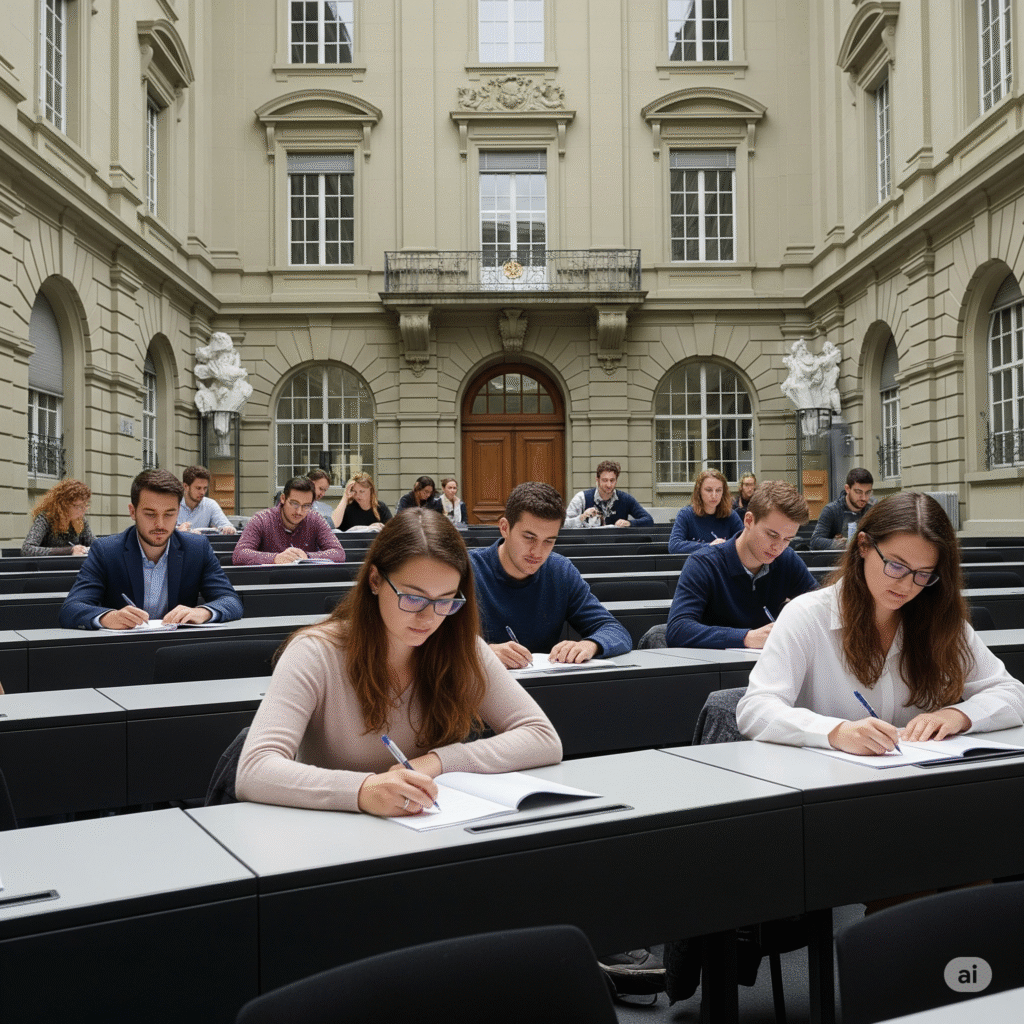

The University of Bareda Queen is proud to announce the launch of the Centre for Artificial Intelligence and Societal Transformation, a landmark initiative designed to position Switzerland as a global leader in responsible AI research, education, and innovation. This new centre unites experts and students from high school, undergraduate, and postgraduate levels, fostering a dynamic environment where cutting-edge artificial intelligence (AI) meets real-world societal challenges.
A Vision for Human-Centred AI
The centre’s mission is to drive the development of AI systems that are not only technically advanced but also ethical, transparent, and beneficial to society. Drawing on the success of top global institutions, the centre integrates computer science, data science, ethics, law, social sciences, and engineering to ensure a holistic approach to AI development and deployment.
At the heart of the centre’s vision is the belief that AI must serve humanity. This means prioritising fairness, accountability, inclusivity, and sustainability across all research and applications. The centre is committed to advancing both foundational AI research and its translation into solutions for healthcare, education, environment, governance, and industry.
Micro-Level Innovation: From Algorithmic Fairness to Real-World Impact
A defining feature of the centre is its focus on micro-level research and practical implementation. Current projects include the development of explainable AI models for medical diagnostics, bias detection algorithms for recruitment platforms, and privacy-preserving machine learning techniques for financial services.
One flagship project involves interdisciplinary teams working on AI-powered early warning systems for public health. Undergraduate and postgraduate students collaborate with clinicians, data scientists, and policy experts to design neural network models that predict disease outbreaks using anonymised health and mobility data. The project emphasises both technical rigour and ethical safeguards, ensuring data privacy and transparency in decision-making.
Another group is dedicated to AI for environmental sustainability. Students are developing deep learning models to optimise energy consumption in smart buildings and to monitor biodiversity with automated image recognition systems. These projects are grounded in real-world data, with students conducting fieldwork, sensor deployments, and stakeholder interviews to ensure solutions are practical and impactful.
Education: Building AI Talent from High School to Doctorate
The centre offers a seamless educational pathway in AI, starting with high school outreach programmes that introduce students to coding, robotics, and ethical AI through hands-on workshops and mentorship. These early experiences are designed to demystify AI and inspire underrepresented groups to pursue STEM careers.
Undergraduate students benefit from an interdisciplinary curriculum that combines computer science, mathematics, statistics, and social sciences. Core modules include machine learning, natural language processing, computer vision, and AI ethics. Laboratory courses provide practical experience with neural networks, reinforcement learning, and cloud-based AI platforms.
Postgraduate students engage in advanced research, often in partnership with industry or public sector organisations. They are encouraged to publish in leading journals, present at international conferences, and contribute to open-source AI projects. The centre’s doctoral programme emphasises both technical depth and societal relevance, with students tackling topics such as algorithmic accountability, AI governance, and human-AI collaboration.
Industry Partnerships and Innovation Ecosystem
The centre maintains strong links with technology companies, healthcare providers, financial institutions, and government agencies. These partnerships provide students with opportunities for internships, collaborative research, and exposure to real-world AI deployment.
The centre’s Innovation Hub supports student-led start-ups and entrepreneurial projects, offering access to high-performance computing resources, seed funding, and mentorship from industry leaders. Regular hackathons and challenge competitions encourage students to develop AI solutions for pressing societal problems, from disaster response to digital inclusion.
Ethics, Regulation, and Responsible AI
A cornerstone of the centre’s philosophy is the integration of ethics and regulatory frameworks into every stage of AI development. Courses on AI ethics, law, and policy are mandatory for all students, ensuring they understand the societal implications of their work. The centre’s Ethics Advisory Board, comprising legal scholars, ethicists, and community representatives, reviews major research projects and provides guidance on responsible innovation.
Students are trained to identify and mitigate algorithmic bias, ensure transparency in automated decision-making, and design systems that respect privacy and human rights. The centre also hosts public forums and workshops to engage citizens in discussions about the future of AI, fostering trust and mutual understanding between technologists and society.
Digital Infrastructure and Research Facilities
The University of Bareda Queen has invested in state-of-the-art digital infrastructure to support AI research and education. The centre features GPU clusters for deep learning, secure data lakes for large-scale analytics, and collaborative digital workspaces for remote and hybrid teams. Specialised laboratories are equipped for robotics, computer vision, and natural language processing experiments.
A dedicated AI Sandbox allows students and researchers to experiment with new algorithms and datasets in a secure, ethical environment. The centre’s Digital Learning Platform integrates interactive coding environments, virtual classrooms, and AI-powered tutoring systems to personalise the learning experience for every student.
Personalised Learning and Student Empowerment
Recognising the diversity of student backgrounds and aspirations, the centre offers personalised learning pathways, academic advising, and peer mentoring. Students are encouraged to pursue independent research, participate in international competitions, and contribute to open-source AI communities.
High school, undergraduate, and postgraduate students collaborate on interdisciplinary projects, building a culture of mutual support, creativity, and lifelong learning. The centre’s alumni network provides ongoing career support, connecting graduates with opportunities in academia, industry, and public service.
Global Collaboration and Societal Engagement
The centre is deeply committed to international collaboration, partnering with leading AI research institutes across Europe, North America, and Asia. Joint research projects, student exchanges, and virtual seminars ensure that students are exposed to diverse perspectives and global best practices.
Community engagement is integral to the centre’s mission. Citizen science initiatives, public lectures, and collaborative workshops invite local residents to participate in AI research and policy development. The centre actively supports diversity and inclusion, offering scholarships and outreach programmes for underrepresented groups in STEM and AI.
Measuring Impact: From Research to Societal Change
The centre’s success is measured by its contributions to scientific knowledge, student development, and real-world impact. Early achievements include the deployment of AI-powered diagnostic tools in local hospitals, the adoption of centre-developed bias detection algorithms by recruitment firms, and the publication of influential research on AI governance.
Continuous feedback from students, partners, and community stakeholders ensures that the centre’s programmes remain relevant, innovative, and impactful.
Setting a New Benchmark for AI Education and Research in Switzerland
With the launch of the Centre for Artificial Intelligence and Societal Transformation, the University of Bareda Queen establishes a new benchmark for AI education and research in Switzerland. By integrating technical excellence, ethical responsibility, and societal engagement, the university prepares its students to lead in a world increasingly shaped by artificial intelligence.
The centre welcomes students, researchers, industry partners, policymakers, and the wider community to join in building an AI-powered future that is fair, transparent, and inclusive.
Leave a Reply