
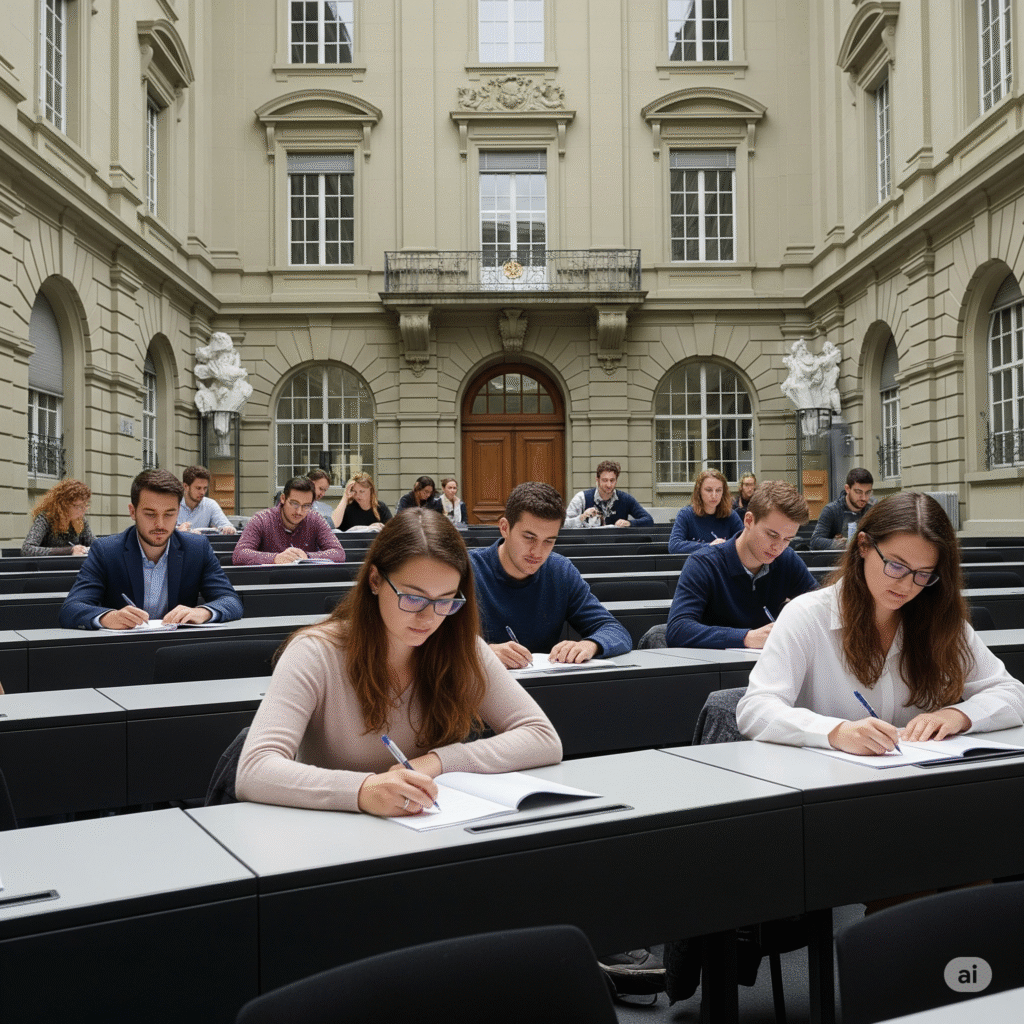

The University of Bareda Queen proudly announces the establishment of the Centre for Precision Agriculture and Food Systems Innovation, a pioneering academic and research hub dedicated to transforming the future of food production, distribution, and sustainability. This new centre integrates expertise from the life sciences, engineering, environmental studies, data science, economics, and social policy, and is designed to nurture talent and drive impact from high school through to postgraduate levels.
A Vision for Resilient and Sustainable Food Systems
The centre is founded on the conviction that the world’s growing population, climate change, and resource constraints demand a radical rethinking of how we produce, process, and consume food. By uniting cutting-edge technology with ecological and social awareness, the centre aims to develop sustainable, resilient, and equitable food systems that can adapt to the challenges of the 21st century.
The centre’s mission is to bridge the gap between advanced research and practical solutions, ensuring that innovations in precision agriculture and food systems are accessible, scalable, and beneficial to producers, consumers, and the environment alike.
Micro-Level Innovation: From Smart Farms to Food Security Analytics
At the core of the centre’s research agenda is a commitment to micro-level innovation—translating scientific breakthroughs into field-ready solutions. Current projects include the development of autonomous robotic systems for crop monitoring and harvesting, sensor networks for real-time soil and plant health diagnostics, and AI-driven platforms for optimising irrigation and fertilisation.
One flagship project involves the deployment of drone-based multispectral imaging to monitor crop stress and predict yields at the plot level. Undergraduate and postgraduate students collaborate with agronomists and engineers to design flight plans, calibrate sensors, and develop machine learning models that transform raw data into actionable insights for farmers.
Another research group is focused on food supply chain resilience. Using blockchain technology and IoT sensors, students and faculty are building transparent, tamper-proof systems that track food from farm to table, ensuring traceability, reducing waste, and improving food safety. These projects involve close collaboration with local producers, logistics companies, and regulatory agencies.
Education: Training the Next Generation of Agri-Food Innovators
The centre offers a comprehensive educational pathway, beginning with high school outreach programmes that introduce students to the science and technology behind modern agriculture. Workshops, field visits, and hands-on experiments are designed to spark curiosity and inspire young people from diverse backgrounds to pursue studies in agri-food sciences.
Undergraduate students benefit from an interdisciplinary curriculum that combines plant and animal biology, environmental science, agricultural engineering, data analytics, and food policy. Laboratory courses and fieldwork are central to the programme, with students gaining practical experience in soil analysis, crop modelling, and the use of precision agriculture tools.
At the postgraduate level, students engage in advanced research on topics such as sustainable pest management, vertical farming, circular food economies, and the application of big data in food systems. Doctoral candidates are encouraged to publish in leading journals, present at international conferences, and collaborate with industry partners on real-world challenges.
Industry Collaboration and Real-World Impact
A defining feature of the centre is its extensive network of partnerships with farmers, agri-tech companies, food processors, retailers, and policy-makers. These collaborations provide students with opportunities for internships, joint research, and exposure to the commercial and regulatory dimensions of the agri-food sector.
The centre’s Innovation Accelerator supports student-led start-ups and entrepreneurial projects, offering access to prototyping facilities, seed funding, and mentorship from industry leaders. Regular innovation challenges and hackathons encourage students to develop and test new technologies, business models, and policy solutions for sustainable food systems.
Digital Infrastructure and Experimental Facilities
The University of Bareda Queen has invested in state-of-the-art infrastructure to support research and education in precision agriculture and food systems. The centre features smart greenhouses equipped with automated climate control, hydroponic and aquaponic systems, and advanced sensor arrays for monitoring plant and environmental variables.
A dedicated Data Science Lab provides students and researchers with access to high-performance computing resources, geospatial analysis tools, and cloud-based platforms for managing and analysing large-scale agricultural datasets. Remote sensing facilities enable the integration of satellite and drone imagery into research and teaching.
Ethics, Sustainability, and Social Responsibility
The centre places a strong emphasis on ethical reflection, sustainability, and social responsibility. All research projects are evaluated for their environmental impact, and students are trained in life cycle assessment, sustainable resource management, and the social dimensions of food systems.
Courses on food ethics, policy, and global food security are embedded throughout the curriculum. The centre’s Ethics and Inclusion Committee ensures that research and innovation are guided by principles of transparency, equity, and community engagement.
Personalised Learning and Student Empowerment
Recognising the diversity of student interests and aspirations, the centre offers personalised learning pathways, academic advising, and peer mentoring. Students are encouraged to pursue independent research projects, participate in international competitions, and present their work at academic and industry forums.
High school, undergraduate, and postgraduate students collaborate on interdisciplinary projects, building a culture of mutual support, creativity, and lifelong learning. The centre’s alumni network provides ongoing career support, connecting graduates with opportunities in academia, industry, and public service.
Global Perspective and Community Engagement
The centre is committed to global engagement, partnering with leading agri-food research institutes and universities across Europe, North America, Asia, and Africa. Joint research projects, student exchanges, and virtual seminars expose students to diverse agricultural systems and best practices worldwide.
Community engagement is integral to the centre’s mission. Citizen science initiatives, public lectures, and collaborative workshops invite local residents to participate in research and policy development. The centre actively supports diversity and inclusion, offering scholarships and outreach programmes for underrepresented groups in agri-food and STEM fields.
Measuring Impact: From Research to Sustainable Change
The centre’s success is measured by its contributions to scientific knowledge, student development, and tangible improvements in food security, sustainability, and rural livelihoods. Early achievements include the successful deployment of sensor networks on partner farms, the launch of student-led agri-tech start-ups, and the publication of influential research on sustainable food systems.
Continuous feedback from students, partners, and community stakeholders ensures that the centre’s programmes remain relevant, innovative, and impactful.
Setting a New Benchmark for Agri-Food Education and Research in Switzerland
With the launch of the Centre for Precision Agriculture and Food Systems Innovation, the University of Bareda Queen sets a new benchmark for agri-food education and research in Switzerland. By integrating advanced science, technology, and social responsibility, the university prepares its students to lead in a sector that is vital to the health of people and the planet.
The centre welcomes students, researchers, farmers, industry partners, policy-makers, and the wider community to join in building a sustainable food future for all.
Leave a Reply